EBITDA calculation: formula, margin and growth
EBITDA = net income + interest + taxes + depreciation + amortization. Step-by-step calculation, a worked example and the EBITDA margin formula.
EBITDA calculation: formula, margin and growth
EBITDA calculation is essential knowledge in finance. EBITDA stands for Earnings Before Interest, Taxes, Depreciation and Amortization, and it provides insight into a company's operating performance, separate from financing and tax choices.
EBITDA is widely used in financial analysis and valuation. It makes profitability comparable across companies and industries, because non-operating expenses are excluded. Note that EBITDA is not a standardized measure: accounting practices differ, which makes understanding its calculation and limitations essential.
What is EBITDA and why does it matter?
EBITDA measures how profitable a company's core business is. Interest and taxes relate to financing and government obligations; depreciation and amortization are non-cash expenses that can distort profitability. By eliminating them, EBITDA offers a cleaner view of operations.
- Insight into operational profitability.
- Comparability across companies and industries.
- Important in valuation, M&A and investment decisions.
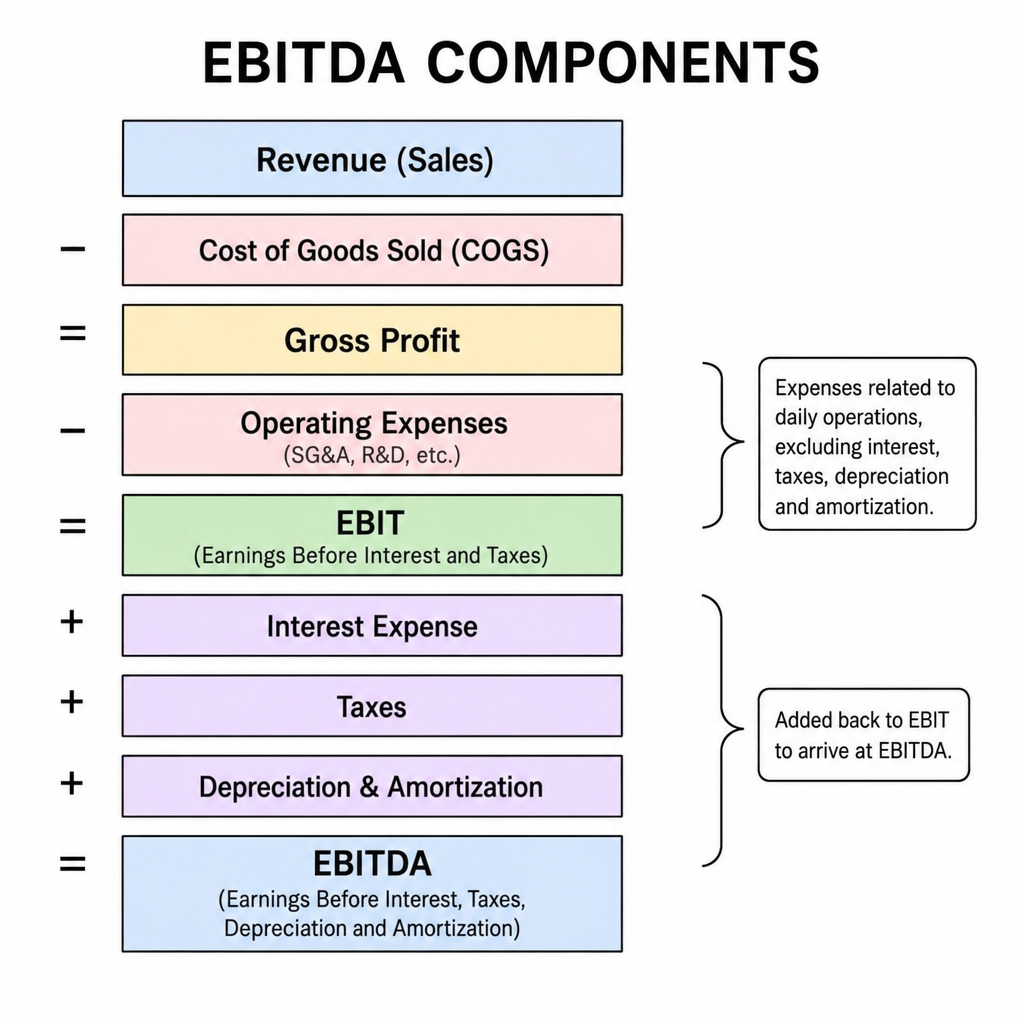
The EBITDA formula, step by step
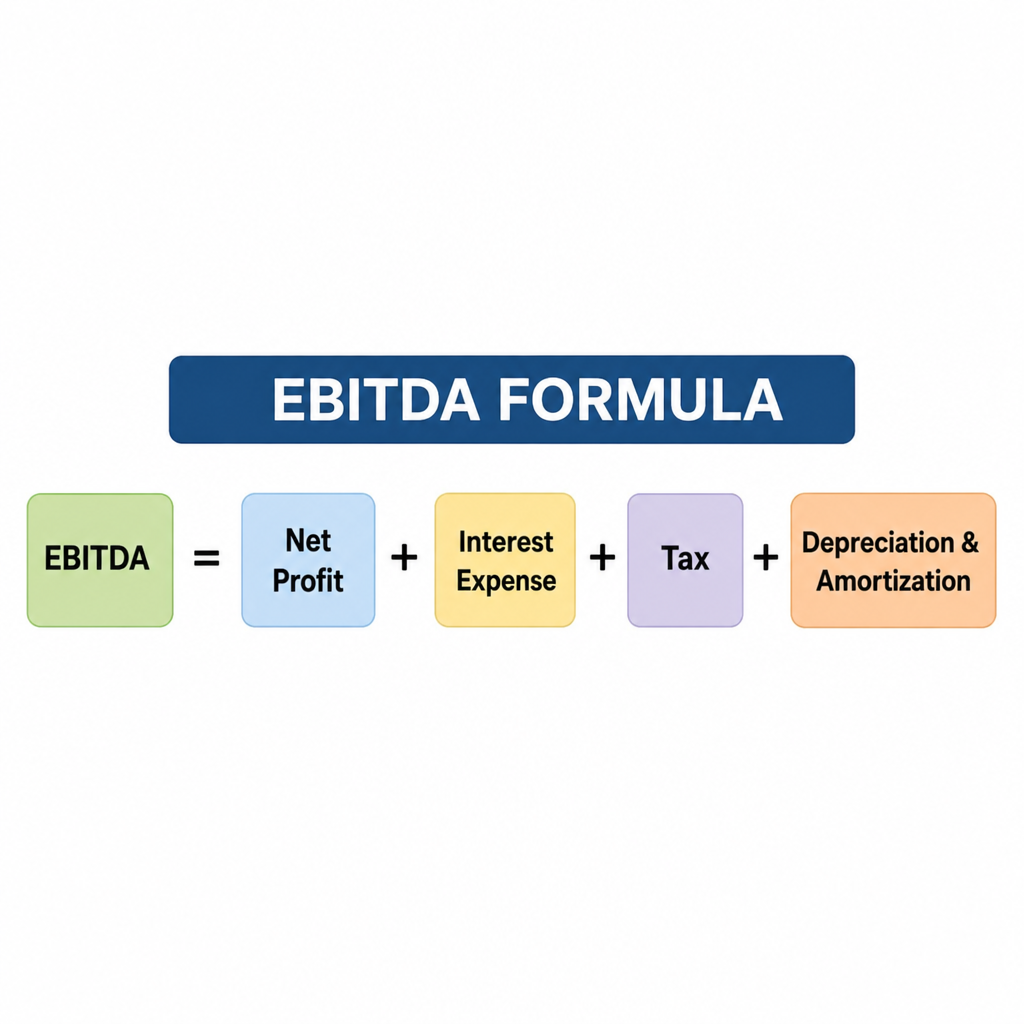
The EBITDA formula is:
EBITDA = net income + interest + taxes + depreciation + amortization
- Start with net income from the income statement.
- Add back interest expense; financing costs are not part of operations.
- Add back taxes.
- Add depreciation.
- Add amortization.
You can also work top-down: revenue − cost of goods sold = gross profit, minus operating expenses = EBIT, plus depreciation and amortization = EBITDA.
EBITDA vs net profit
EBITDA and net profit measure different things. EBITDA focuses on operational performance; net profit is the bottom line including all expenses and income.
- EBITDA: operational profit, excluding non-operating costs and non-cash charges.
- Net profit: total earnings, including interest, taxes and depreciation.
Use EBITDA to gauge operational health and net profit to assess overall financial performance. Together they give a well-rounded picture.
EBITDA adjustments: what to include and why
Adjusted EBITDA normalizes earnings so one-off events don't distort comparability. Common adjustments:
- Non-recurring or unusual expenses, such as restructuring charges.
- Changes in accounting estimates or policies.
- Impact of discontinued operations.
- Costs related to mergers and acquisitions.
Calculating the EBITDA margin
The EBITDA margin shows what percentage of revenue is left after operating expenses:
- Compute EBITDA from your financial statements.
- Divide by total revenue.
- Multiply by 100 to get a percentage.
An EBITDA margin of 30% means 30 cents of every euro of revenue remains as operating profit. Margins vary strongly by industry, so always compare within the same sector.
Calculating the EBITDA growth rate
The EBITDA growth rate shows how earnings evolve over time, year-over-year or quarter-over-quarter:
- Identify the periods to compare.
- Subtract the earlier period's EBITDA from the later period's EBITDA.
- Divide the difference by the earlier period's EBITDA and multiply by 100.
Consistent growth suggests a robust business model; fluctuating or negative growth calls for a closer look at causes and external factors.
Worked example
A company reports net income of €500,000, interest expense of €50,000, taxes of €40,000 and €60,000 in depreciation and amortization.
EBITDA = 500,000 + 50,000 + 40,000 + 60,000 = €650,000.
Strengths and limitations in financial analysis
EBITDA is ideal for comparing companies with different capital structures and is used in M&A, benchmarking and assessing debt service capability. Its limitation: EBITDA ignores capital expenditure and working capital. Relying on it alone can hide cash flow problems, so always pair EBITDA with cash flow and net profit analysis.
Common mistakes and best practices
- Verify your data sources: work with reliable, reconciled data.
- Apply adjustments consistently: only then are periods comparable.
- Contextualize the figures: benchmark against industry norms.
- Separate one-off from recurring items: otherwise EBITDA is misleading.
Frequently asked questions about EBITDA
What is the EBITDA formula?
EBITDA = net income + interest + taxes + depreciation + amortization. Alternatively: EBIT + depreciation + amortization.
What is a good EBITDA margin?
It depends on the industry. Software companies often reach high margins, while trading and manufacturing businesses structurally sit lower. Always compare within your own sector.
What is the difference between EBITDA and EBIT?
EBIT is earnings before interest and taxes; EBITDA adds depreciation and amortization back on top of EBIT.
Is EBITDA the same as cash flow?
No. EBITDA ignores capital expenditure, working capital movements and interest and tax payments, so it is not a substitute for a cash flow statement.
EBITDA automatically in your reporting
In Smartbooks, EBITDA, EBITDA margin and their development per entity or consolidated are part of your standard reports, without any Excel work. Book a demo and see it on your own numbers.
Related articles
Solvency ratio: how to calculate it, formula and benchmarks
August 18, 2026
Return on equity and assets: formulas for ROE, ROA and ROI
August 18, 2026
Working capital: calculation, formula and benchmarks
August 21, 2026
Current ratio: formula, benchmark and worked example
August 18, 2026
Break-Even Point Calculation: Formula, Worked Example and Margin of Safety
September 18, 2026
Gross Margin Calculation: Formula, Example and Benchmarks
September 9, 2026